Rethinking Genesis

T E HannaReaders who love to delve and checked out my recent claims on Genesis will be interested in an email received today about ancient cosmologies. Theologian T.E. Hanna is examining the religio-cultural influences of the ancient ‘cradle’ of civilisation upon the Hebrews and the Bible’s origin. He blogs,

A RECURRING criticism of the creation narratives in Genesis 1 and 2 point to the overwhelming similiarities between them and the surrounding cultural myths of the Ancient Near East.

In Rethinking Genesis, T.E. briefly refers to historians’ claims of Moses appropriating Mesopotamian and Egyptian creation myths for writing Genesis. I agree with his line of reasoning in asking if the purpose of the opening chapters of Genesis is to teach not about earth and humanity, but about God?

This argument is made in a research paper available to readers of his blog. He argues that, rather than adopting the mythologies of the surrounding ancient East, the Hebrew cosmologies were written as a criticism of them. As theological education for an emerging Israelite nation, the purpose of these narratives was to emphasize the nature of the God of Israel in contrast to the surrounding polytheism, while also conveying His superiority over competing religions.

If you love to delve then visit Of Dust and Kings, read what he and his readers say and, if interested, consider downloading the PDF of The Cosmology of Genesis 1.

Also, please read discussion with TE Hanna in Thoughts on ‘Rethinking Genesis’ >>

Replay of Munich ’38 missed – only just!

A serious miscalculation by America has been averted – for the time being.

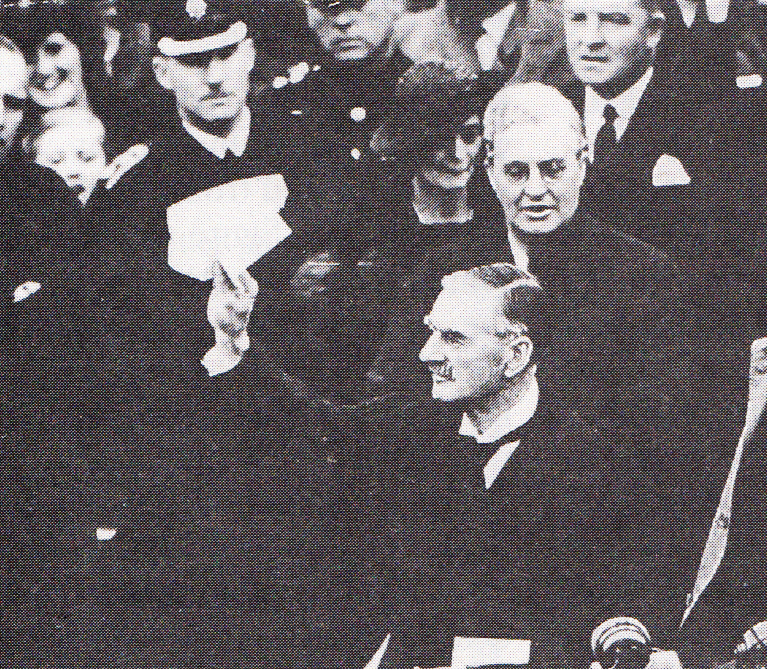
Like British PM Neville Chamberlain in Sept 1938, POTUS Barack Obama prefers peace rather than war with a totalitarian, supremacist regime. But as my parent’s generation learned, appeasement [1] comes only at a high price. A ‘peace for our time’  agreement with Nazi Germany wasn’t worth the paper it was written on [2].

Proviso

Let me clarify for first-time visitors and newer subscribers to this blog, I’ve no political axe to grind whatsoever. Over 25 years ago (when anti-Christian), I was confronted by  the singular goal of Iraq and Iran, although at war with one another! [3]  Therefore, I’ve been well aware of the Iranian regime’s ultimate aim – the destruction of the state of Israel.

It’s important to be aware of today’s situation’s connection to the ‘Ezekiel 38 Alliance’  that was foreseen millennia ago and recorded in the Bible [4]. This coalition is made up  mainly of Iran/Persia, Syria and Turkey along with its leader, Russia. They were seen as becoming united against, and seeking to destroy, Israel. These ancient and modern facts cannot simply be ignored.

Political leaders would, therefore, be well advised to tread very carefully in dealing with this alliance.

Summary

Last week, US Secretary of State Kerry’s headlong push for a disastrous agreement in Geneva with Iran over its nuclear ambitions has brought recriminations from national leaders and many well-informed commentators.

Although claiming to cover Israel’s back, Obama has been in secret, back-channel talks with Iran, especially since the election of President Rouhani [5]. His team had arranged for nothing important to be conceded by the Iranian’s for easing international sanctions. That is, it was not known this arrangement did not require Iran to reduce refinement of uranium and halt production of nuclear weapons [6], which was the rationale behind sanctions.

Israeli PM Netanyahu was reportedly ‘in a state of shocked disbelief’ and felt ‘misled’ by ‘messianic-complex’ Kerry [7], who is said to have threatened Israel with sanctions over its peace negotiations with the Palestinians, who are never, ever at fault! [8].  The US was accused of deceit because,

‘…the interim nuclear accord negotiated directly between Washington and Tehran was already secretly in the bag before the 2-day talks between Iran and the Six World Powers took place in Geneva on Thursday…’. [9]

Middle-East analyst Daniel Pipes foresaw the 911 attack and recently reiterated,

I wrote before the last presidential election that “Israel’s troubles will really begin” should Obama win second term. At Obama’s second inauguration, I predicted that he, “freed from re-election constraints, can finally express his early anti-Zionist views after a decade of political positioning. Watch for a markedly worse tone from the second Obama administration toward the third Netanyahu government.” [10]

America’s Arab allies in the Gulf were also horrified by the bad deal and felt cheated. In line with their strong reaction [11] to Obama throwing Egypt’s President Mubarak under the bus, Saudi Arabia has been arranging to buy nuclear warheads from Pakistan as protection from a nuclear-armed Iran [12].

Then when Iran and the Six met for 3 days in Geneva, France unexpectedly scuttled the deal at the last minute on behalf of the Europeans, Saudi Arabia, the UA Emirates and Russia [13]. Joel Rosenberg sees God’s hand in changing this situation [14]. Expecting a generous hand-out from the US and an easing of stringent sanctions, Iran’s President Rouhani urgently met Supreme Leader Khamenei and reminded him their ‘cupboard is bare’. [15]  Hoping to negotiate with more flexibility, he’ll have a tough time persuading Iran’s top dog.

The US ‘capitulated’ [16]. Disingenuous Kerry blamed Israel’s Netanyahu and claimed Obama is a man of his word, but was met with deep scepticism by their partners. This is no surprise bearing in mind not only American deceit in changing the deal but also over Obama’s credibility gap as a result of the Syria farrago [17]. On Sunday,

…Netanyahu hit back at his misrepresentation as the lone spoiler by revealing his contacts with the European powers represented in Geneva and his close cooperation with the Arabian Gulf, including Saudi Arabia.

“The world should pay heed when Israel and the Arabs speak with one voice. It doesn’t happen that often,” he said… Washington sources admit that the group effort by Jerusalem, Paris and Riyadh to defeat the Obama administration’s Iran policy was a groundbreaker. One source noted that it had attained the unheard-of level of coordinated Israeli-Arab-European teamwork for mobilizing individual US congressmen and senators against the deal with Iran and in favor of tighter sanctions. (Emphases added)

The game is clearly changing for the US in the Middle-East because Russian Foreign Minister Sergey Lavrov and Defence Minister Sergey Shoigu are on a two-day visit to Cairo [18]. This will conclude a major sale of advanced Russian weaponry to Egypt’s army and for Russian naval access to ports on the Mediterranean. (Obama chose to delay assistance because Egypt refused to acquiesce to his demand to reinstate the Muslim Brotherhood, probably because of his elder brother’s involvement with them!)

Yesterday, the Head of International Atomic Energy Agency issued a report of his visit to Iran on Monday. According to Debka, he pointed out that he had seen no changes in Iran’s nuclear activities in the three months since the election of Hassan Rouhani. Iran continues to enrich uranium up to the 20% level and his comments

…exploded the optimistic assumption at the root of the Obama administration’s soft policy on Iran, namely that Tehran had assumed a new, moderate face, amenable as never before to talking through a deal on its nuclear program. [19]

Yukiya Amano’s urgently arranged meeting with supreme leader Khamenei was meant to be an opportunity for him to signal that he approved of further efforts to overcome the impasse reached last week in Geneva.

A show of goodwill from Khamenei would have been used by the US administration to persuade Israel, France and Saudi Arabia to stop fighting the draft accord they’d thrown out. Iran’s Foreign Minister promised the Americans that if the IAEA chief came to Iran then an audience with Khamenei would be set up.  But the whole three days Amano  was in Tehran no audience materialised. He was fobbed off with paper and photo-op for ‘a roadmap for cooperation’. So Khamenei’s brush-off for Amano put paid to efforts to improve the stand-off.

Conclusion

So today it’s very interesting to read that a professor of law at Harvard has just asked: “Is this our Chamberlain moment?” [20]. Oh, what a surprise!

When published, the full details of the current state of affairs and how the crisis erupted must surely read better than any political thriller. Just let these links tantalise you…

Links for LOTS MORE details:

  1. ‘Appeasement’ in the mid-20th century
  2. Neville Chamberlain’s official statement
  3. Richard’s Watch: read about The Invisible Hand in Welcome..
  4. Richard’s Watch: Events indicate the Bible’s relevance today
  5. Charles Crawford: Iran at the UN – Diplomatic Chess
  6. Debka: Major Israel-US rift over allowing more uranium enrichment
  7. Joel Rosenberg: …Rapidly intensifying crisis in US-Israel relations
  8. Aaron Klein: Kerry threatening Israel
  9. Debka: Israel accuses US of deceit on nuclear deal
  10. Daniel Pipes: Obama turns on Israel
  11. Richard’s Watch: Deep US-Saudi rift emerges
  12. Joel Rosenberg: Arab allies of US horrified by deal…
  13. Debka: France’s last-minute hold-out aborts Iran deal…
  14. Joel Rosenberg: France scuttles disastrous nuclear deal…
  15. Debka: Iranian leaders urgently mull some nuclear flexibility…
  16. Israel Hayon: ‘US capitulated’ on Iran deal…
  17. Debka: Kerry bids from Abu Dhabi to break up broad front…
  18. Debka Exclusive Report 12 November 2013
  19. Debka: …Khamenei refuses to see nuclear watchdog director
  20. Gatestone Institute: Nuclear peace with Iran in our time

Orphan wins beauty contest in Iranian court

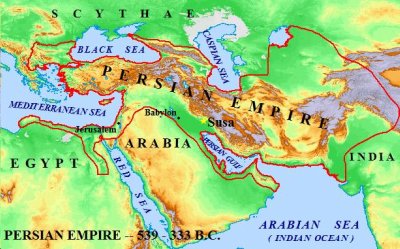
This headline belongs to the story of an orphaned young lady named Esther in the heart of the ancient Iranian, or Persian, empire about 2,600 years ago. It is recorded in the well-known book bearing her name. (Wikipedia explains the national names.)  In closing the last post I wrote about the likely relevance of her story to developments in the UK today. Before elaborating, I must outline Esther’s exceptional story.:

PersianEmpireAbout 100 years earlier, the Hebrew people had been taken into captivity from Israel and Judea by Babylonian king Nebuchadnezzar. His empire fell to the Medes and Persians (as the prophets predicted) and one of the first actions of king Cyrus was to repatriate exiled peoples and to re-instate their national gods.

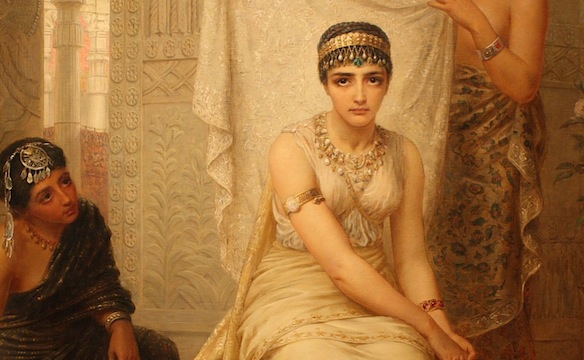
The Jews benefited greatly and a few groups returned over subsequent decades to rebuild destroyed Jerusalem and its temple built by King Solomon. Some Jews stayed behind, however, of which Mordecai, a minor official, was one. His great-grandfather was one of the original captive exiles and, later, an uncle and aunt died leaving their daughter an orphan. So, Mordecai looked after his younger cousin as his own daughter. The Bible describes the situation and that, ‘The young woman was lovely and beautiful’  (Esther 2:5-7).

Several years after their surprising defeat by the Greeks at the Battle of Marathon in 490BC, there were good reasons for Persian king Ahasuerus (Xerxes I) to give a huge feast at the climax of six months’ display of his wealth and power. His queen threw a huge party too, but refused his request to join his celebrations, thereby giving offence to not only the king but also to his courtiers. She even refused his command to be brought before him!  His council of regional princes thought her action set a bad example, and one which other ladies may follow! The first chapter in Esther records how the princes answered their king (please note the emphasised principles),

“If it pleases the king, let a royal decree go out from him, and let it be recorded in the laws of the Persians and the Medes, so that it will not be altered, that Vashti shall come no more before King Ahasuerus; and let the king give her royal position to another who is better than she.  20 When the king’s decree which he will make is proclaimed through-out all his empire (for it is great)…21 And the reply pleased the king and the princes, and the king did according to the word of Memucan. 22 Then he sent letters to all the king’s provinces, to each province in its own script, and to every people in their own language.
Thus Xerxes deposed his queen and his servants later recommended that a replacement be found by means of a beauty contest, to which the king agreed and issued a decree. Mordecai advised Esther not to tell of her Jewish roots and took her to the king’s palace for selection. This was followed by 12 months’ beauty preparations before being presented personally to King Xerxes, when…

The king loved Esther more than all the other women, and she obtained grace and favor in his sight more than all the virgins; so he set the royal crown upon her head and made her queen instead of Vashti. 18 Then the king made a great feast, the Feast of Esther, for all his officials and servants; and he proclaimed a holiday in the provinces and gave gifts according to the generosity of a king. (Esther 2)

About that time, Mordecai uncovered a plot to overthrow the king. So, Esther informed the king in her cousin’s name. Afterwards, the king appointed Haman above all princes and commanded all to pay him homage. But Mordecai refused to do so!  This wicked, intensely anti-Semitic leader therefore hated Mordecai and devised a conspiracy, with financial incentives, to wipe out all Jews from the kingdom. Later, he built a ‘gallows’ on his own property for Mordecai.  Thus, the king was manipulated into issuing a decree and handed his signet ring to Haman for authorising the decree into law (Esther 3).

Mordecai learned about this plan (Esther 4) and informed Esther, who responded,

“All the king’s servants and the people of the king’s provinces know that any man or woman who goes into the inner court to the king, who has not been called, he has but one law: put all to death, except the one to whom the king holds out the golden sceptre, that he may live. Yet I myself have not been called to go in to the king these thirty days.”

This ruling applied even to Queen Esther!  Mordecai challenged her with these famous words:

“Do not think in your heart that you will escape in the king’s palace any more than all the other Jews. 14 For if you remain completely silent at this time, relief and deliverance will arise for the Jews from another place, but you and your father’s house will perish. Yet who knows whether you have come to the kingdom for such a time as this?”

Esther resolved to go before the king making supplication on behalf of her people, and requested back-up prayers and fasting,

“…And so I will go to the king, which is against the law; and if I perish, I perish!” 
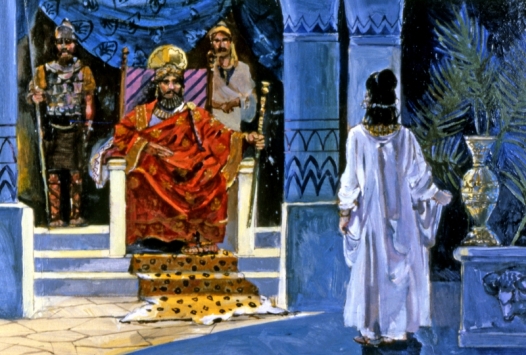
Courtesy of Gilbert and Beers

Now it happened on the third day that Esther put on her royal robes and stood in the inner court of the king’s palace, across from the king’s house, while the king sat on his royal throne in the royal house, facing the entrance of the house.[a]  2 So it was, when the king saw Queen Esther standing in the court, that she found favour in his sight, and the king held out to Esther the golden sceptre that was in his hand. Then Esther went near and touched the top of the sceptre.

To find out what happened next and to gain insights into how God works to protect His people, continue reading here… (click therein for next short chapters).

To return to my notes on the Mentoring Day with Dr Sharon Stone click for either Part 1 or for Part 2.

Footnote:

This historic deliverance of the Jews from extermination is celebrated annually during the Feast of Purim. For more information in a brief introduction to the Book of Esther read Mary Fairchild’s summary, and read the whole, short book at Bible Gateway’s website.

More about revival in Wales…

Welsh Revival DWRobertsIt’s wonderful to hear about the increasing impact the current Outpouring in Wales is having upon many newly saved, as well as mature Christians, for churches and communities across the UK.

Thank you Dyfed for your comments received today. I’d like to draw the attention of readers interested in my reports on Cwmbran and wanting more, to your research into The Welsh Revival and its aftermath.  Looks an informative read.

It is important, however, not to assume an exact replay of that revival because the Lord’s given us many encouraging promises of an entirely ‘new season’ in these days, as recounted herein.

In fact, only last Saturday a pastor told me of his recent visit to Cwmbran and how it may match his understanding of what God’s about to do in Britain.  I was stirred with the similarity between the open vision he’d received and the one that had astounded and troubled me back in 2004. It seems his may forecast the next, or a later, phase of what’s been happening in Britain as a result of having turned away from our heavenly Father, to where He graciously turns the tide to bless us and bring full revival to our ‘walking dead’.

We shall soon see…

US Israeli-Palestine policy makes dramatic shift

Obama to Palestinians: Accept the Jewish State

Policy shift challenges the core of Arab resistance

Obama in Israel - Courtesy D Pipes

Under the above headline and lead-in published as Tuesday’s ‘Editor’s Pick’ in the Washington Times, leading Middle-East analyst Daniel Pipes opens with.:

One key shift in U.S. policy was overlooked in the barrage of news about Barack Obama’s eventful fifty-hour visit to Israel last week. That would be the demand that Palestinians recognize Israel as the Jewish state, called by Hamas leader Salah Bardawil “the most dangerous statement by an American president regarding the Palestinian issue…

in his Jerusalem speech last week, Obama suddenly and unexpectedly adopted in full the Israeli demand: “Palestinians must recognize that Israel will be a Jewish state.””

Pipes is of the opinion.:

Daniel PipesThat sentence breaks important new ground and cannot readily be undone. It also makes for excellent policy, for without such recognition, Palestinian acceptance of Israel is hollow, indicating only a willingness to call the future state they dominate “Israel” rather than “Palestine.”

The one-page article is very instructive, albeit concise, in its overview of the history of modern Israel and minimal on reference to America. If any reader is unfamiliar with these important facts then I recommend their reading the article (here). It is updated to include reference to hostility to Obama’s speech from a London-based Arab editor.

Obama’s fledgling mentor

Last weekend’s Inside the White House from Bill Koenig reports.:

A naïve, idealistic and inexperienced 35-year-old is molding Obama’s Middle East foreign policy, which is leading the region to Armageddon –

How could that be? President Obama, who had very little real-world experience before he took the office, apparently doesn’t fully understand the great importance of surrounding himself with experienced Middle East staff.

williamkoenig-web[1]Bill refers to Mark Landler of The New York Times’ article, Worldly at 35 and Shaping Obama’s Voice; ‘Benjamin J. Rhodes, a 35-year-old deputy national security adviser with a soft voice, strong opinions and a reputation around the White House as the man who channels Mr. Obama on foreign policy, has had a very significant hand in some of the great failures in the Middle East in the last three years and nine months.’

Landler reveals that Rhodes first came to prominence after he wrote Mr. Obama’s landmark address to the Muslim world in Cairo in June 2009. The speech was notable for President Obama’s assertion that governments should “reflect the will of the people,” prefiguring his policy in dealing with President Hosni Mubarak and Colonel Qaddafi.’

Koenig adds, ‘The speech Obama gave to the Muslim world from Cairo, Egypt in 2009, was filled with inaccuracies, falsehoods and total distortions, and was obviously written by someone unfamiliar with the region, the long history of the Israeli-Palestinian conflict or the depth of conflict between the Shiites and the Sunnis.

‘Just think’, writes Koenig, ‘Obama spoke to the Muslim world with a speech written by a young ideologue with very little real world experience, a speech that he gained much credit for, which further led to his responsibility for preparing and writing Obama’s major address to the Israelis this week.

‘Rhodes wasn’t even born at the time of the Six-Day War of 1967 or the Yom Kippur War of 1973. Furthermore, he’s had a major influence on some very serious decisions that have had horrible results…’

[Koenig’s in-depth critique of Obama’s Cairo speech is here, my briefer points here.]

Postscript: As ever, Carolyn Glick’s insights and reservations made in advance of the visit make for an interesting read; see Obama’s mysterious visit. Also, my recent post on Raymond Stock covers the issues in some depth.]

Prophetic Perspective

From my perspective this is a most interesting development and yet another to thank the Lord for in answer to the prayer request and prophetic words published late last year. (See original post, with developments here and here.)

UPDATE 25 April: see Viscount Samuel, Meet Secretary Hagel by Daniel Pipes for news of Secretary of Defense Hagel turning over a new leaf regarding Israel.

Pope Francis and the Archbishop of Canterbury – God’s outsiders pointing to a new era for the church

Gillan ScotA superb reflection upon the unusual juxtapositioning of both enthronements from Gillan Scott. He adroitly observes and comments upon the work of the Holy Spirit, “If there was evidence needed for this, the election of two men who were off many people’s radar is surely it.”  I also entirely agree with his emphasis; “…When this sort of thing happens it usually heralds change.”  Readers of this blog will note how this may be related to several prophetic words along those lines and as reported in recent months. March may be more momentous in God’s plans than my friend surmises – at about the same time a newly elected government in Israel is hosting the visit of a recently re-inaugurated President of the USA. Truly, these are most interesting times!

Palestinians could have been celebrating their state’s 65th anniversary! What happened?

A very useful summary of factual history for easy quick reference. Thank you Joel.

joelcrosenberg's avatarJoel C. Rosenberg's Blog

(Los Angeles, California) I am sympathetic to the plight of the Palestinian people. They are loved by the Lord God of the Bible, but they are forgotten or ignored by much of the world. Tragically, most of their leaders over the years have been either corrupt, misguided, or incompetent. They deserve so much better. Consider briefly the sad pattern of modern history:

* 1947— Humanly speaking, the Palestinians could have been celebrating the 65th anniversary of their state today. After all, 65 years ago today, the U.N. voted on the “Partition Plan,”giving part of British Mandated “Palestine” to the Jews to create the state of Israel, and part to the Arabs to create a Palestinian/Jordanian state. The Jewish leaders said yes to the U.N. plan, and created Israel. The Arabs said no to the U.N. plan, and went to war to destroy the Jews. They lost the war and got heartache and poverty instead.

* 1967

View original post 892 more words