N O T ‘MADE IN CHINA’ B U T ‘BOUGHT BY CHINA’!
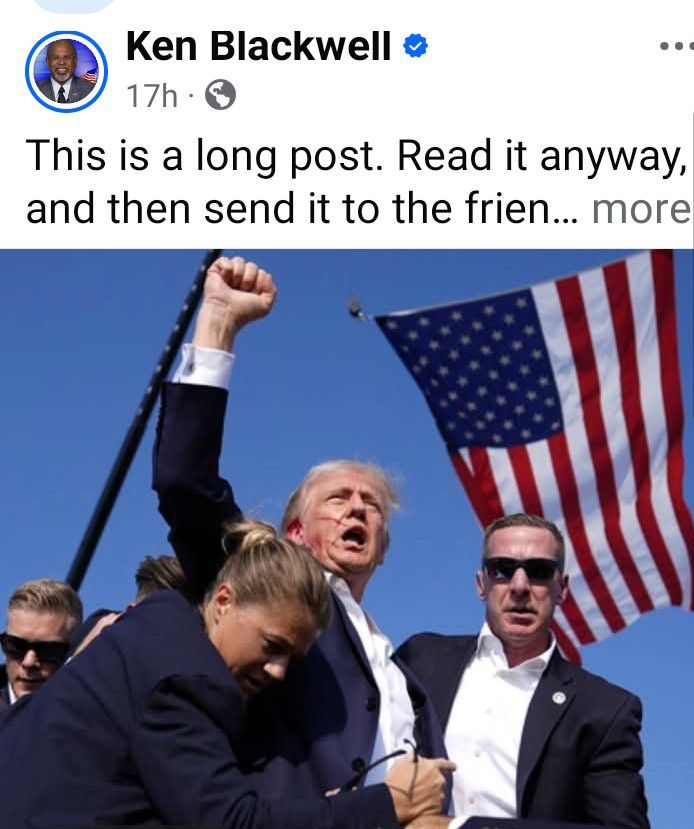
Thank you to Ken Blackwell of Ohio for this news, another validation of my prophetical musing of 2016 and subsequent fulfilments, as listed/tagged herein :
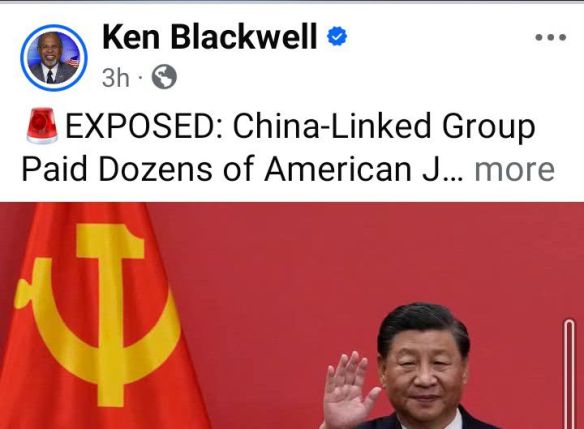
🚨EXPOSED: China-Linked Group Paid Dozens of American Journalists to Manufacture Positive Coverage for the CCP. Here are their names! 🚨
The documents Natalie Winters published today show a Beijing-aligned political warfare network sponsoring 54 American journalists on trips through China and Hong Kong from 2010 through 2018.
The foundation covered the airfare, the hotels, the meals, and the ground transportation, and then it covered the thing that actually mattered, which was access no honest reporter could arrange on his own and no reader would ever be told about.
These Americans were walked through China’s Foreign Ministry, the Commerce Ministry, the Finance Ministry, the National Development and Reform Commission, the People’s Bank of China, the China Investment Corporation, and the Asian Infrastructure Investment Bank.
They were seated with senior Communist officials and given guided tours of the propaganda machine itself, including Xinhua, CCTV, People’s Daily Online, and Global Times. On one edition of the program, a handler from the Information Department of China’s Foreign Ministry rode along for the entire mainland leg and joined the Americans at their official banquets.
Nobody was tricked into any of this. The program stated its purpose in writing, bringing American journalists together with Chinese counterparts to discuss how coverage of each country could be “improved.” The foundation’s later materials threw out the diplomatic language altogether and said the delegations existed to tell “positive stories” about Hong Kong and mainland China.
The program demanded at least five years of experience and recruited senior people from the biggest outlets in America. It hunted editors above all, and you should understand exactly why. A reporter writes a story, while an editor decides which stories are allowed to exist at all, which ones run on page one, and which ones die quietly in a meeting no reader will ever hear about. Beijing was buying the room where American news gets decided, and Beijing got it at a discount.
Here are all 54, with the jobs they held at the time.
Saeed Ahmed, supervising news editor, CNN
Robert Little, senior investigative editor, NPR
Stephen Stromberg, editorial writer, The Washington Post
Juliet Lapidos, staff editor, The New York Times
Autumn Brewington, op-ed page editor, The Washington Post
Holly Yeager, Middle East and Asia editor, The Washington Post
Carrie Halperin, producer, CNN’s Fareed Zakaria GPS
Elizabeth Ralph, deputy editor, Politico Magazine
Doyle McManus, Washington columnist, Los Angeles Times
Rebecca Davis, senior video producer, NBC News
Kevin Beesley, Asia editor, NPR
Leslie Norton, Asia editor, Barron’s
Brian Wingfield, energy and trade reporter, Bloomberg
Valerie Volcovici, correspondent, Reuters
Diane Bartz, reporter, Reuters
Alan Wirzbicki, editorial page writer and editor, The Boston Globe
Alexander Kingsbury, deputy ideas editor, The Boston Globe
Michael Freedman, senior editor, Newsweek
John Schoen, senior producer, MSNBC.com
Adam Behsudi, trade reporter, Politico
Michael Stratford, reporter, Politico
Mariana Keller, senior video producer, NBC News
Jake Heller, producer and host, NBC News
Jesus Ayala, producer, ABC News
Oren Dorell, foreign affairs correspondent, USA Today
Joshua Keating, staff writer, Slate
Evelyn Cheng, staff writer, CNBC
Mary Childs, senior reporter, Barron’s
Benjamin Bartenstein, emerging markets reporter, Bloomberg
Jessica Schulberg, foreign affairs reporter, HuffPost
Alexander Kaufman, reporter, HuffPost
Don Lee, economics reporter, Los Angeles Times and Tribune Washington Bureau
Alexander Travelli, Asia online editor, The Economist
Erica Grieder, Southwest correspondent, The Economist
Roya Wolverson, senior writer, Time
Kopin Tan, senior editor, Barron’s
Sandra Ward, senior editor, Barron’s
Joe Schatz, senior writer, Congressional Quarterly
Patricia Hill, chief economic correspondent, The Washington Times
Jeffrey Chu, articles editor, Fast Company
Nathan Bomey, reporter, Detroit Free Press
Daniel Beekman, reporter, The Seattle Times
Lomi Kriel, reporter, Houston Chronicle
Andy Curliss, state government editor, The News and Observer
Janet Cho, business reporter, The Plain Dealer
Liz Jones, reporter, KUOW Public Radio
Robert Chaney, staff writer, the Missoulian
David Whiting, Page One columnist, Orange County Register
Marc Stewart, reporter and substitute anchor, KMGH-TV Denver
William Luckie, news anchor and reporter, KLTV
Pia Lopez, associate editor, The Sacramento Bee
Robert Ballenger, editor and producer, NPR
Tom Waseleski, editorial page editor, Pittsburgh Post-Gazette
Karin Caifa, producer, CNN Newsource
Look at what that investment is worth today. The CNN supervising editor now runs digital news platforms for the Associated Press, which means he helps decide what wire copy lands in your hometown paper.
The NPR investigative editor now runs NPR’s investigations team, which means he decides what NPR digs into and what NPR leaves alone.
The Washington Post editorial writer became a New York Times opinion editor for politics and economics, the New York Times staff editor became a deputy editor at The Atlantic, and the Slate writer now covers foreign policy and international conflict for Vox.
The CNBC staff writer is now CNBC’s correspondent in Beijing, filing from the capital of the government that once hosted her.
Beijing did not waste its money on the bottom of American journalism. It identified the people who would be running the business fifteen years later and got to them early, which means the Communist Party ran a better talent operation than our own newsrooms did.
Now understand who was sitting across that table. The sponsoring foundation worked hand in glove with the Chinese People’s Political Consultative Conference. Americans hear that name and picture some harmless civic club, but the bipartisan U.S.-China Economic and Security Review Commission created by Congress calls it a major coordinating institution of the Communist Party’s United Front system. That is the machinery Beijing uses to recruit and run influential foreigners, and its delegates take direction on how Party policy should be sold to foreign audiences. The Commission’s own finding is that such delegates can serve as proxies for Communist Party interests.
Our government warns that United Front work overseas can involve political influence, intelligence collection, and technology transfer, and that its stated purpose is to “co-opt and neutralize” opposition to the Party while seizing control of how the world sees China.
American journalists were seated with vice chairmen of that body over and over again, and they were introduced to Tung Chee-hwa and C.Y. Leung while both men held senior positions inside it. The foundation reported its activities back to central government officials in Beijing and partnered with the Conference’s Shanghai committee.
Strip away the brochure language and what remains is an influence operation with a hospitality budget, and 54 Americans took the seat they were offered.
The foundation’s own chief executive said as much out loud in 2005, when he described one of these delegations as a “united front” and explained that the point was to deliver one strong message. They confessed the entire operation in plain English twenty years ago. American media heard it, understood it, and kept boarding the plane anyway.
The operation worked, and the Communists kept score themselves. In 1995, Fortune ran its famous cover declaring the death of Hong Kong. In 2007, the foundation briefed a Fortune journalist during one of these tours, and Fortune promptly published a piece announcing that Hong Kong was hardly dead. The foundation then celebrated that reversal in its own materials as proof its media outreach worked, which means Beijing was grading its American assets in writing and liked what it saw.
Then read the coverage the trips produced. One writer traveled with the 2013 delegation to a government-selected industrial zone in Nanchang, and while he was still on the sponsored trip he filed a piece calling Nanchang a city of the future, gushing over its immense changes and its optimistic spirit and urging the world to pay closer attention to what China was building. Readers were told he wrote for Slate, and readers were never told who bought the ticket.
A decade later, he was still at it, instructing Americans to thank Xi Jinping for their gas prices.
A Los Angeles Times columnist made the 2010 trip and came home to explain that Chinese leaders feel threatened and cornered by the United States, that their aggression amounts to self-defense as they see it, and that they are as frightened of the future as we are.
He went on to admire how adaptable one-party rule has proved to be, which is the language of a man repeating a briefing he was given.
A Barron’s Asia editor made that same 2010 trip, and within weeks the magazine ran her piece on China’s sure bet. She later informed American investors that China would sit on top of the new world order. Beijing paid for the travel and collected the coverage, which makes every dime of it money well spent.
So every outlet on this list and every editor still cashing their checks owes the country some answers this week. Who approved these junkets, and what does the paperwork say? Did a single disclosure ever run alongside the stories that followed, and if not, who made that call and does that person still have a job today?
These same newsrooms spent years lecturing America about foreign influence and ran wall-to-wall coverage of Russian interference while demanding tax returns, donor lists, and travel records from every conservative in public life. The entire time, their own senior editors were flying on a Communist front group’s dime and telling their readers nothing about it. Where was the special counsel for that?
Would any of these outlets accept the identical arrangement from an oil company, a gun manufacturer, or a Republican donor and then keep it out of print? Everyone in America knows the answer, because they would put it on the front page for a week and call it corruption, which is precisely what it is.
How many of these editors sat in judgment of stories about Chinese trade cheating, Chinese technology, the Uyghur camps, the destruction of Hong Kong, or the origins of COVID-19 without ever mentioning that Beijing had hosted them? What is your travel policy right now, in August 2026, and will you publish every foreign-government-funded trip your staff has taken since 2010, or will you sit on your hands and pray this dies by Friday?
And to the readers in Cleveland who trusted their business reporter at the Plain Dealer to tell them the truth about the plants that packed up and moved to China, did anybody ever tell you who was picking up the tab?
This runs deeper than any single article. Beijing never had to purchase a headline outright, because buying headlines is expensive and clumsy and leaves fingerprints all over the crime. Cultivating the people who choose the headlines costs one plane ticket and pays dividends for twenty years, which is the genius of the thing, and it worked on the most self-righteous industry in America. These are the people who wrap themselves in the First Amendment and call themselves the last line of defense against tyranny, and a Communist front group bought their good opinion with a hotel room and a banquet.
Propaganda carrying a Chinese government byline persuades nobody in this country, while propaganda carrying an American byline in the paper your mother has trusted for forty years walks straight past every defense we have. That is the whole operation, and that is exactly why it was worth the money to them.
A free press is one of the greatest blessings God ever gave a free people, and it was never meant to serve as a hospitality suite for a regime that runs concentration camps in Xinjiang, strangled Hong Kong in front of the entire world, and lied to every nation on earth about a virus that killed millions.
Fifty-four names are now on the record.
Keep them somewhere you can find them, because the next time one of these outlets tells you what to think about China, you already know that Beijing paid for the answer.















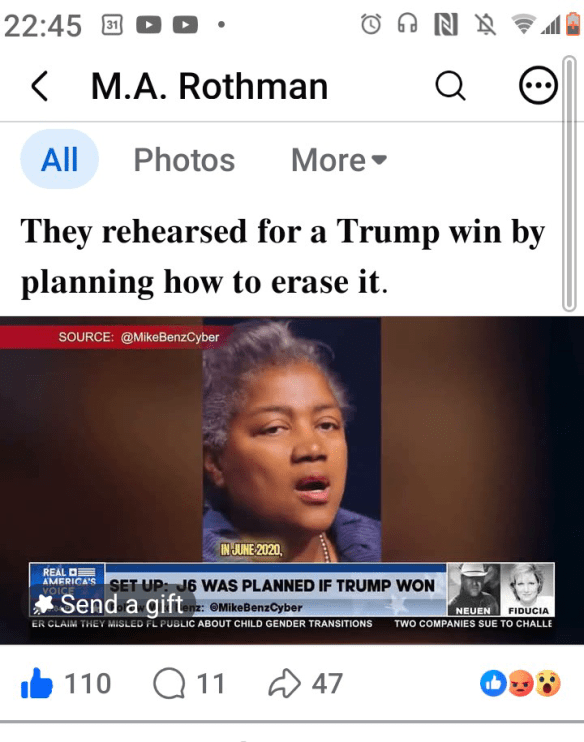 𝐂𝐘𝐁𝐄𝐑 𝐀𝐍𝐀𝐋𝐘𝐒𝐓 𝐌𝐈𝐊𝐄 𝐁𝐄𝐍𝐙: 𝐃𝐍𝐂 𝐎𝐅𝐅𝐈𝐂𝐈𝐀𝐋𝐒 𝐖𝐀𝐑-𝐆𝐀𝐌𝐄𝐃 𝐇𝐎𝐖 𝐓𝐎 ‘𝐃𝐄𝐌𝐎𝐁𝐈𝐋𝐈𝐙𝐄’ 𝐓𝐑𝐔𝐌𝐏’𝐒 𝐁𝐀𝐒𝐄 𝐈𝐅 𝐇𝐄 𝐖𝐎𝐍 𝐈𝐍 𝟐𝟎𝟐𝟎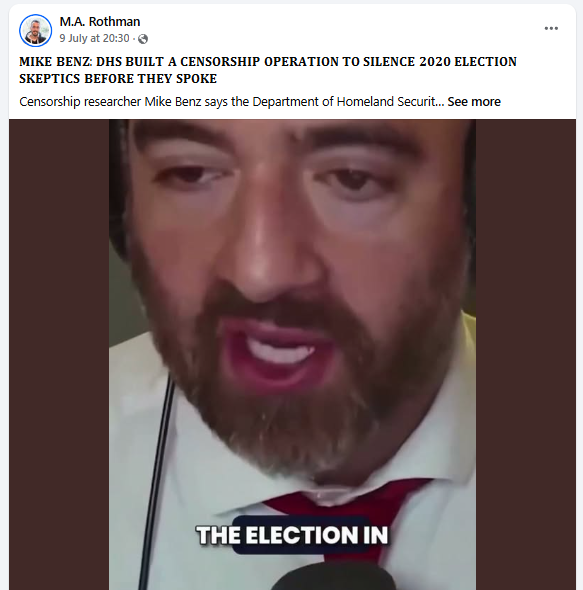
 Richard's Watch