
Number two’s yet again, as earlier today, AND relating to a favourite topic as on blog’s hub Time: A Primer… and parts of what Yvonne brings confirms my understanding:

A few nights ago, I dreamt I was opening a Door in space and time with the number 222.
Last night I had a Dream that seemed more like an experience, a transitioning sense that had no detail in it.
It felt as though the dream went on all night and every time I awoke, I had a beautiful sense of peace and praise in my mouth.
All I know is that many of us were on an exodus. Family was present. I felt like I had to keep repeating out loud, “We have five thousand (5000) hours to go”.
The only detail was that an extremely large caravan appeared just before the dream ended, maybe 5 times larger than an average caravan.
As I came to the end of the dream, I found myself changing the words to “We have five (5) hours to go before we leave this place.” There was peace surrounding this move.
I was praying and praising on my dog walk discussing this dream with The LORD and five (5) Canada geese flew over my head. I was led to look at 2 Chronicles 20.
Five (5) represents God’s Grace. I do not believe there’s a literal time here, but I do believe The LORD is encouraging his pioneers that His Grace and Favour is being quickened.
Many are sensing time being sped up.

I later saw that a line of camels are called a Caravan. They carry supplies and trade goods on the journey.
Camels are also called trains and The LORD is reminding us that His Glory Train is moving at speed.
In the last few years, this Train needed to build momentum, yet now it is at full speed. Prepare to board beloved.
As with the Dream of 222 and the Door. Isaiah 22:22 says,
“I will place on his shoulder the key to the house of David; what he opens no one can shut, and what he shuts no one can open”. Isaiah 22:22
There is an establishing of the apostolic works and the Five-fold Ministry, to trust and enter new promise.
David’s Song of Praise (2 Samuel 22).
David sang to The LORD the words of this song when The LORD delivered him from the hand of all his enemies and from the hand of Saul. He said:
“The LORD is my rock, my fortress and my deliverer,” 2 Samuel 22:2
We are to praise the King of Glory in 2024 – (Psalm 24).
We are to remember verse 17 of 2 Chronicle 20, (RB’s emphasis)
“You will not need to fight in this battle. Position yourselves, stand still and see the salvation of the Lord, who is with you, O Judah and Jerusalem!’ Do not fear or be dismayed; tomorrow go out against them, for the Lord is with you.” 2 Chronicles 20:17
Yes we are in a spiritual battle and need to intercede, yet to remember he has ALREADY established us in the spiritual, and now we are readied to witness it in the natural.
Press and Praise it in!
Jehoshaphat’s Prayer
“Behold, they reward us by coming to drive us out of your possession, which you have given us to inherit. O our God, will you not execute judgment on them? For we are powerless against this great horde that is coming against us. We do not know what to do, but our eyes are on you.”
Meanwhile all Judah stood before The LORD, with their little ones, their wives, and their children. And the Spirit of The LORD came upon Jahaziel the son of Zechariah, son of Benaiah, son of Jeiel, son of Mattaniah, a Levite of the sons of Asaph, in the midst of the assembly. And he said, “Listen, all Judah and inhabitants of Jerusalem and King Jehoshaphat: Thus says The LORD to you, ‘Do not be afraid and do not be dismayed at this great horde, for the battle is not yours but God’s. Tomorrow go down against them. Behold, they will come up by the ascent of Ziz. You will find them at the end of the valley, east of the wilderness of Jeruel. You will not need to fight in this battle. Stand firm, hold your position, and see the salvation of The LORD on your behalf, O Judah and Jerusalem.’ Do not be afraid and do not be dismayed. Tomorrow go out against them, and The LORD will be with you.”
Then Jehoshaphat bowed his head with his face to the ground, and all Judah and the inhabitants of Jerusalem fell down before The LORD, worshiping The LORD. 19 And the Levites, of the Kohathites and the Korahites, stood up to praise The LORD, the God of Israel, with a very loud voice. And they rose early in the morning and went out into the wilderness of Tekoa. And when they went out, Jehoshaphat stood and said, “Hear me, Judah and inhabitants of Jerusalem! Believe in The LORD your God, and you will be established; believe his prophets, and you will succeed.” And when he had taken counsel with the people, he appointed those who were to sing to The LORD and praise him in holy attire, as they went before the army, and say, “Give thanks to The LORD, for his steadfast love endures forever.”
And when they began to sing and praise, The LORD set an ambush against the men of Ammon, Moab, and Mount Seir, who had come against Judah, so that they were routed. For the men of Ammon and Moab rose against the inhabitants of Mount Seir, devoting them to destruction, and when they had made an end of the inhabitants of Seir, they all helped to destroy one another.”
The LORD Delivers Judah
“When Judah came to the watchtower of the wilderness, they looked toward the horde, and behold, there were dead bodies lying on the ground; none had escaped. When Jehoshaphat and his people came to take their spoil, they found among them, in great numbers, goods, clothing, and precious things, which they took for themselves until they could carry no more. They were three days in taking the spoil, it was so much.” 2 Chronicles 20:11-25

Please also see linked Glory Train Word: Arrival of the Glory Train
 No such thing as ‘coincidence’. Being focused upon what I’m hoping to publish on this full blog-day (BUT other items popped up!) I hadn’t got around to visiting Facebook as there was message on Telegram to attend and then copy screen-grabs of news on my browser tabs and get into drafting the previous two posts (along with ‘live’ PS!). After posting them I shared with my



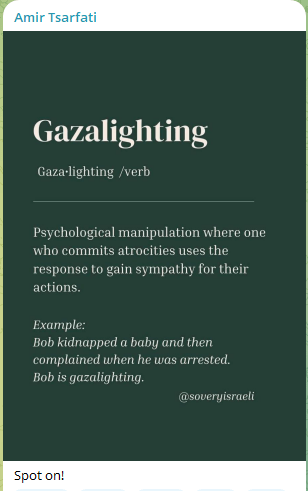
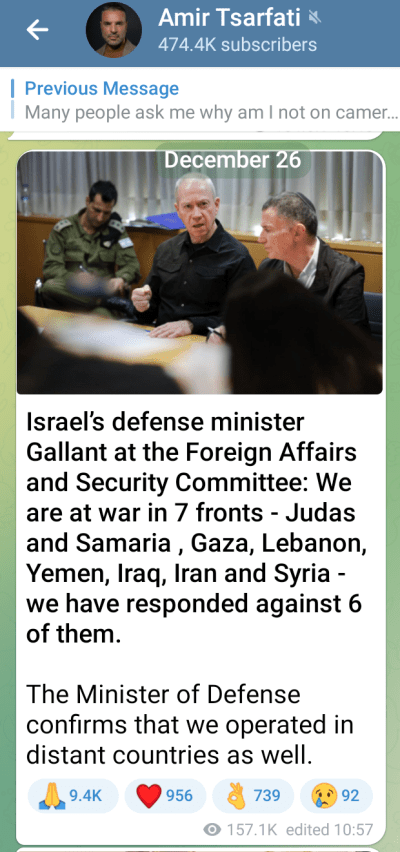 Selection of December’s reports:








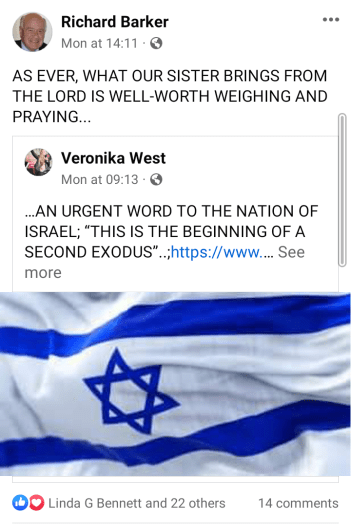


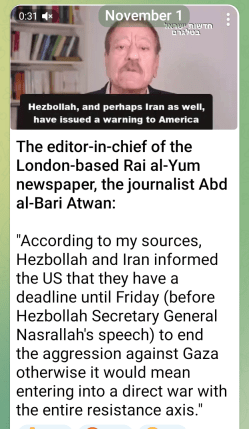




 Richard's Watch